
Hal Leonard Method, RCM and contemporary programs are available. RCM courses will use their specific curriculum. Our contemporary program is developed on the principle of “the existence of a world outside of classical music and its traditions.”
This program provides a pathway to a musical life outside of the classical music realm, feeding students’ hunger to learn music that appeals to them on their desired instrument. The classroom will foster a personalized lesson approach to aid in achieving the student’s musical goals with guidance from one of The Academy’s qualified instructors.
Strum, Pick, Tap, Shred… Those are just some of the many ways your fingers are challenged and pushed to make incredible sounds on the bass. The bass is revered as one of the coolest instruments in music — but at Zamar, playing bass goes beyond just being cool.
We challenge every bass student to experience as many different styles as possible on their instrument.
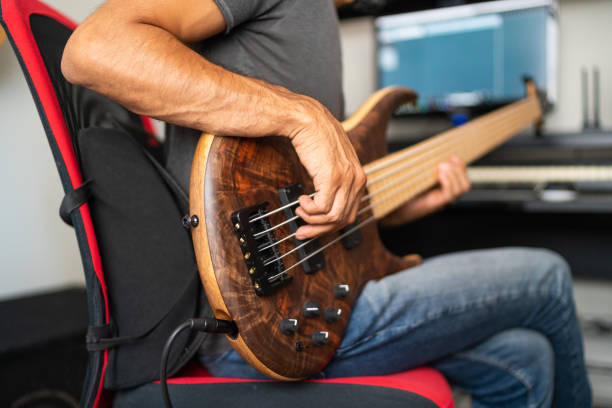
The bass syllabus provides a structured method for Zamar Music bass students. Bass is a versatile instrument that can be used in many facets of a musician’s career. From high school bands to professional bands, a bassist can add depth and harmony to any music. Due to the nature of the bass, it can cover a large range of genres from rock to jazz to classical.
The intent of the syllabus is to provide a comprehensive electric bass method that will aid students from beginner to advanced levels. It will also provide a means to introduce the theory-heavy concepts of the bass while giving an opportunity for students to learn songs to keep their interest throughout the levels.
The syllabus primarily uses Hal Leonard Bass Method Books 1, 2 and 3, guiding students through four exam levels. After the Hal Leonard Method, the student will use “Berklee Practice Method: Bass” to continue their learning.
This section will deal with identifying notes on the fretboard. Through the use of finger exercises and scales, students will obtain the ability to utilize and communicate these concepts on the bass guitar.
The studies section will generally be simple songs or exercises that focus on specific concepts: a certain set of notes, a new rhythm, syncopation, etc. Through practising these, students will reinforce these concepts for use in future applications.
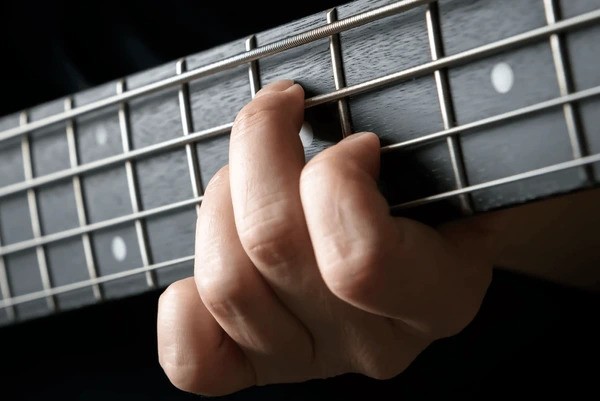
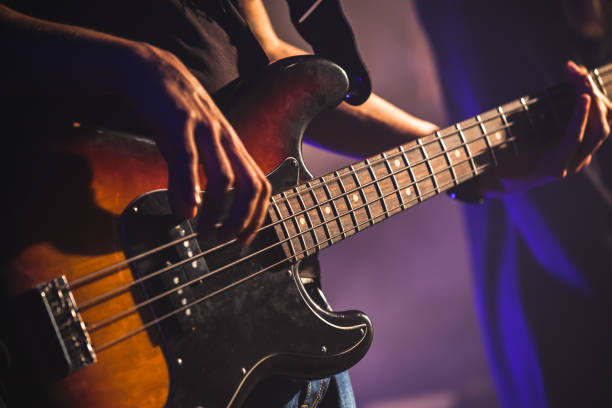
For the Bass Method, the selections consist of song forms such as the blues. They will introduce concepts such as repeats, codas, D.C. al Fine, etc. Selections will help reinforce these ideas.
Starting at Level 1, students will be required to learn a longer, more complete song. The purpose is to simulate a real performance. These pieces will be played from memory and must be practised until near perfection is achieved.
This section will handle basic theory concepts and will reinforce the “how and why” of what the student has learned in the corresponding level. Theory examinations will include simple note identification, concepts such as ties and pickup measures, how to construct a scale, etc. This part of the examination will include an ear test.
The earlier levels will introduce rhythm clap-backs for newer students and will eventually progress to students being able to identify intervals as well as major/minor chords. Each ear test will be framed according to what students will be exposed to in each of the levels.